For most UK businesses, energy is no longer a predictable overhead. What was once a relatively stable cost has become one of the most volatile and difficult lines to manage on the balance sheet.
Although prices have eased somewhat since the extreme peaks of 2022–2023, electricity remains structurally more expensive than historical norms. More importantly, it is far less predictable. That uncertainty is now forcing many energy-intensive businesses to revisit a fundamental question:
Is it still viable to rely entirely on grid electricity, or is it now cheaper—and more strategic—to generate power on-site through a Power Purchase Agreement (PPA)?
To answer that properly, it’s important to understand what businesses are really paying for in 2026.
At first glance, grid electricity appears simple. There’s no infrastructure to install, no operational responsibility, and no long-term commitment beyond a supply contract. But that simplicity masks a more complex and increasingly costly reality.
Behind every unit of grid electricity sits a mix of volatile wholesale prices, steadily increasing network charges, environmental and policy levies, and supplier margins. Even when businesses choose to fix their energy contracts, they are still fixing at market-influenced rates, typically for relatively short periods of one to three years. When those contracts end, they are exposed to whatever the market looks like at that point.
The core issue isn’t just cost—it’s unpredictability. For businesses with high energy demand, that volatility feeds directly into squeezed margins, unreliable forecasting, and difficulty planning long-term.
A solar PPA changes that dynamic entirely.
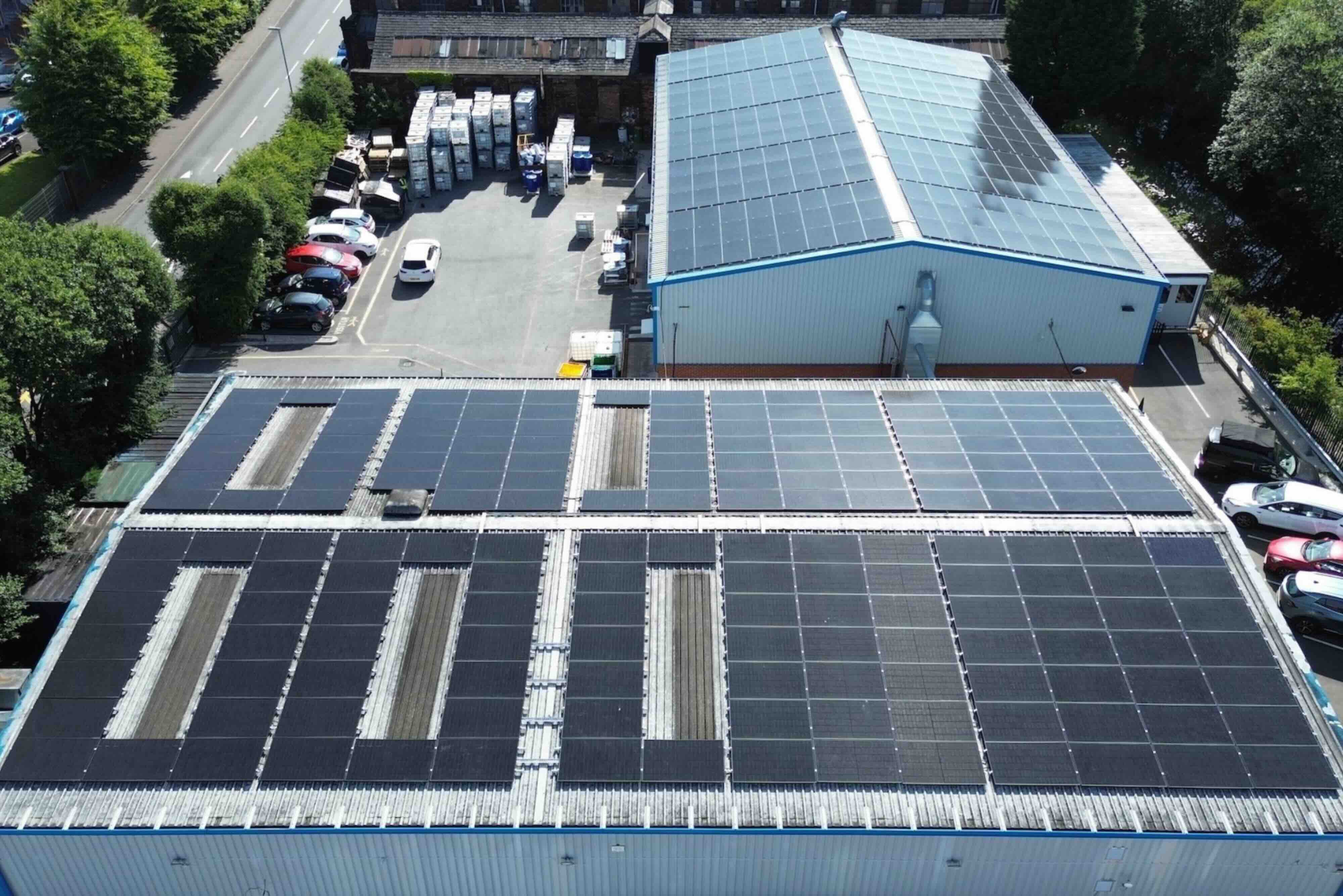
Rather than purchasing all electricity from the grid, a business generates a significant portion of its power on-site. A third party funds, installs, and maintains the system, while the business simply agrees to buy the electricity it produces at a pre-agreed rate over the long term—typically between 10 and 25 years.
In practical terms, this means a portion of energy demand is secured at a stable, often lower cost. Reliance on the grid is reduced, and exposure to market volatility is significantly limited.
When comparing grid electricity with a PPA, most businesses instinctively focus on price per kWh. But the real comparison is broader than that—it’s about both price and predictability.
Grid electricity prices fluctuate with wholesale markets, and contracts must be renegotiated regularly, often at higher rates. There is little long-term visibility, and non-energy costs continue to rise. By contrast, a solar PPA typically delivers a lower cost per kWh from day one, alongside long-term price certainty and protection from market spikes.
In many commercial scenarios, this means solar-generated electricity is not only cheaper initially, but becomes increasingly valuable over time as grid prices trend upwards.
However, one of the most overlooked factors in this comparison is volatility itself.
Fluctuating energy prices carry a hidden cost. They make budgets unreliable, force reactive procurement decisions, and create unexpected pressure on margins. Stability, on the other hand, has tangible value. With a PPA, energy costs become predictable, enabling more accurate forecasting and giving finance teams greater control over operating expenses.
For large energy users, that stability can be just as important as the direct cost savings.
The long-term picture makes the difference even clearer. Businesses that remain fully reliant on the grid continue to renegotiate contracts and stay exposed to market cycles, all while facing ongoing upward pricing pressure. Those with on-site solar lock in a portion of their energy at a stable rate, reduce their overall blended electricity cost, and build resilience against future price increases.
Over a 10 to 25-year period, that gap compounds significantly.
So, what’s actually cheaper in 2026?
In most cases, the answer is clear. A solar PPA delivers lower-cost, lower-risk electricity compared to relying solely on the grid. This isn’t because grid electricity is inherently flawed, but because it is structurally volatile, lacks long-term pricing certainty, and leaves businesses exposed to continuous cost increases.
And increasingly, the decision isn’t being driven by cost alone.
Businesses are turning to PPAs to gain control over their energy spend, protect themselves from market uncertainty, and enable more confident long-term financial planning. Sustainability targets and compliance requirements are also playing a growing role.
In that context, the conversation has shifted. It’s no longer “Should we consider solar?”
It’s “How much longer can we afford not to?”
For energy-intensive businesses looking to understand what a PPA could mean in practice, Shawton Energy can provide a detailed feasibility assessment, outlining potential generation, cost savings, and long-term financial impact.


